
The shape and feeling
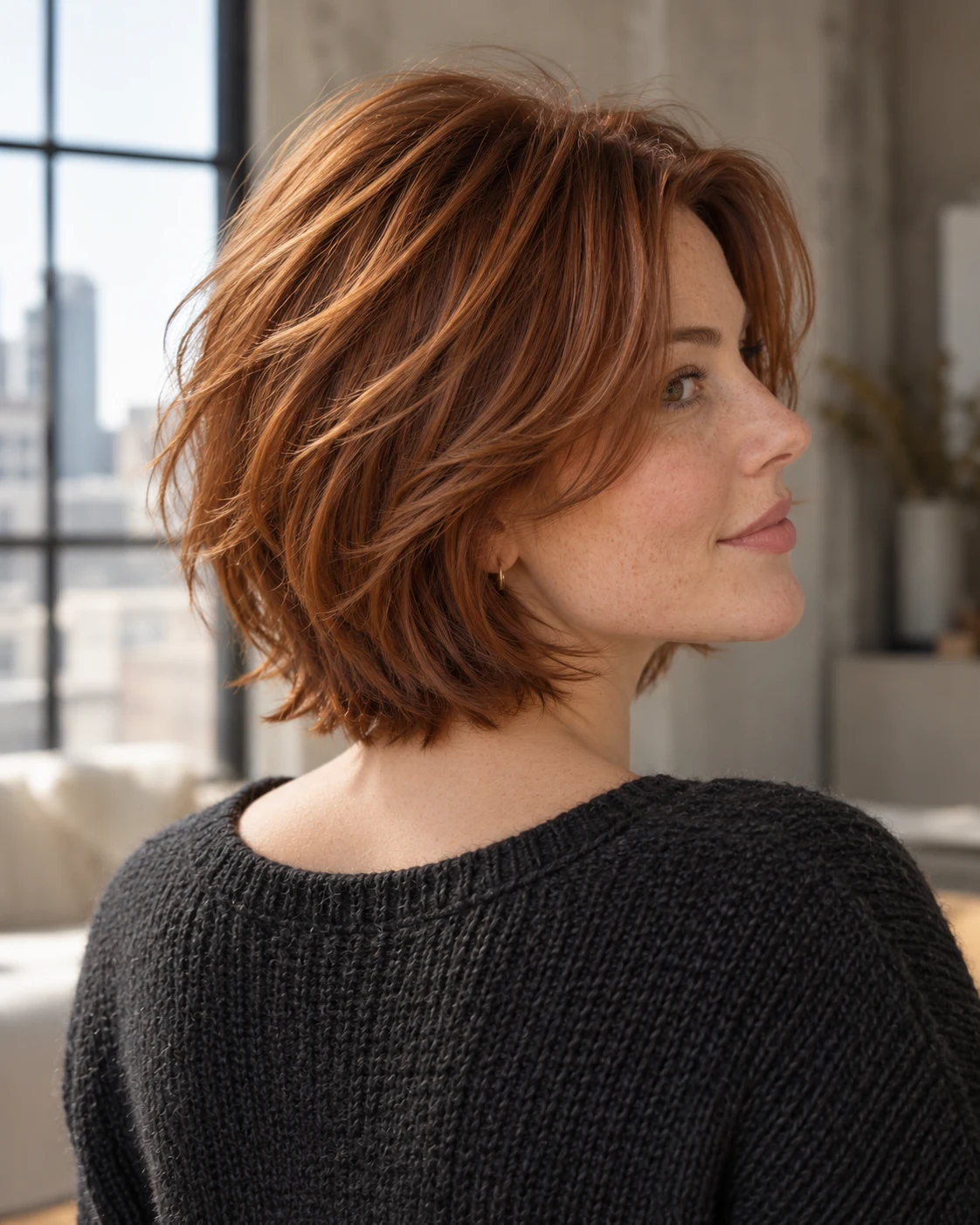
The kitty cut feels light and lively without the strong outline of a blunt bob or the pronounced tail of a wolf cut. Feathered pieces around the cheekbones and jaw create the movement, while the back keeps a soft, rounded shape. From the side, the ends can turn out slightly rather than sitting in a heavy line. The aim is a gentle, connected silhouette—not a disconnected two-tier cut.
Colour possibilities
Soft brown, beige-brown and fine low-contrast highlights can pick out the face-framing layers. For a more individual finish, consider a small accent around the ears, underneath the surface or at the tips. Place brightness around the actual cut so the colour still works after the next trim.
Before choosing this cut
Fine hair benefits from a fuller base and restrained layering. Dense hair may need weight removed inside while keeping the outer strands intact. The shortest face-framing layer can sit below the cheekbone to lengthen the outline, or nearer the sides to add width. With strong curls or fragile bleached ends, discuss shrinkage and density before choosing the final length.
Styling and everyday care
Dry the roots in their natural direction, then guide the face-framing pieces with a small brush or your fingers. Use a little lightweight styling product through the ends rather than coating the roots. Ask your stylist to demonstrate the amount of outward movement that suits your version.
Questions about Kitty Cut
Is a kitty cut the same as a bob?
No. A bob is usually defined by its perimeter; the kitty cut relies more on soft face-framing layers and moving ends.
Can I wear it with fine hair?
Often, with a lower layer placement and enough weight at the ends. Avoid copying a heavily thinned reference without discussing your density.
Discuss the cut and colour plan at your preferred location. View Spadina prices or North York prices before your consultation.