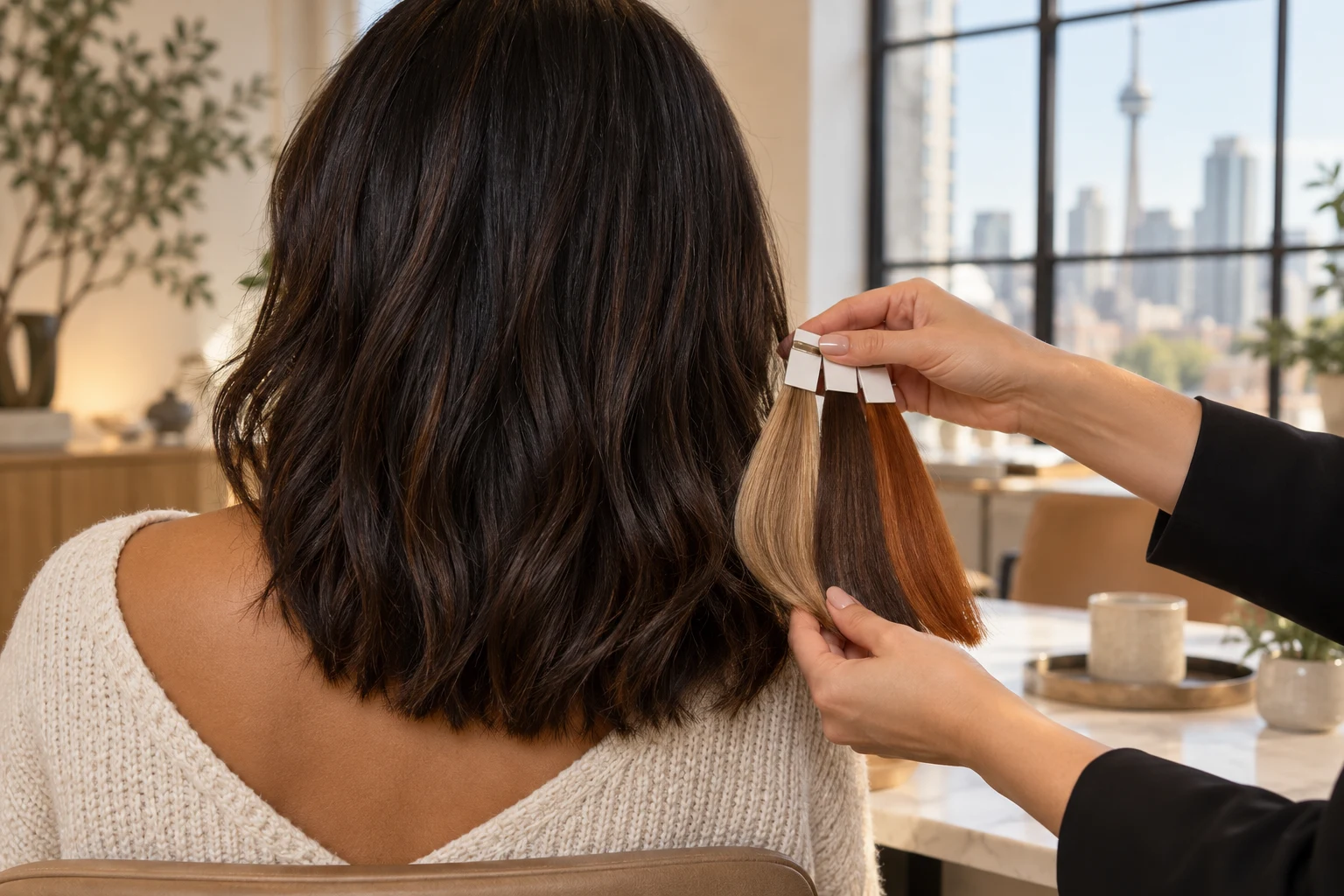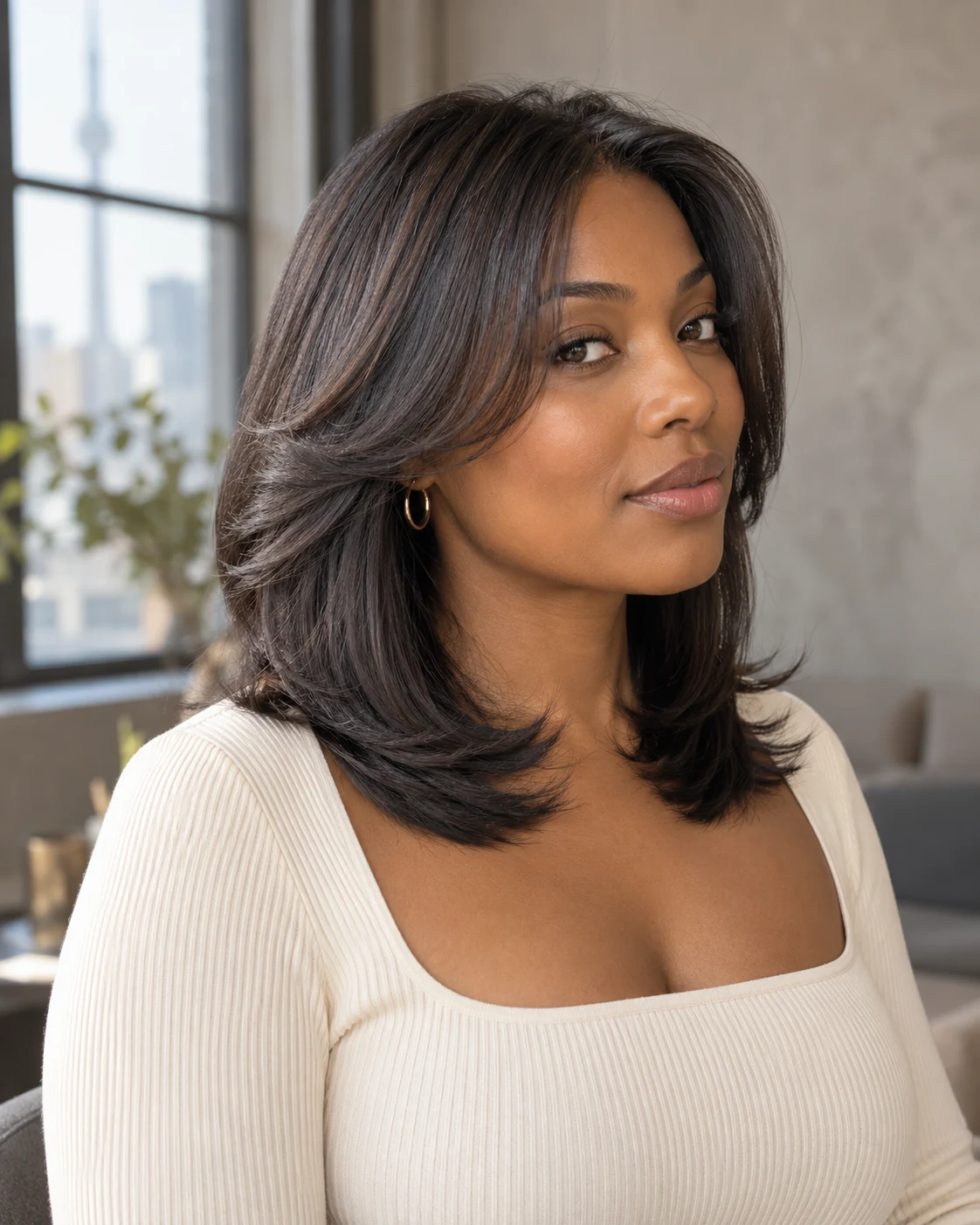

Permanent straightening can change the way existing hair sits, but the service needs a careful assessment of texture and previous treatments. A smooth finish does not mean the hair has been repaired, and the right plan may involve selected areas rather than the whole head.
What a straightening service changes
Chemical straightening uses a system that reshapes the treated hair, often with controlled heat and a neutralising stage. New hair continues to grow in its natural texture. Names such as Japanese straightening, thermal reconditioning and straight perm can be used differently by salons. Ask which process is offered, what result is realistic and how it differs from a temporary blow-dry or a smoothing treatment.
The names do not guarantee a gentler treatment
A natural-looking finish depends on consultation, formula choice, sectioning and application—not simply a newer service name. Both a very sleek result and a softer outline need attention to the hair's strength. Bleached, weakened or previously relaxed hair may be unsuitable for another chemical service. A conditioner cannot make every damaged strand safe to straighten. Your stylist may recommend postponing the service or using a different styling approach.

Preserve the volume you want
Reducing curl can also reduce the volume that supports your current shape. Fine hair may sit closer to the scalp, and a blunt bob can look different once it falls straighter. Discuss the crown, fringe and ends separately. If you want a C-shaped end or visible movement, show that clearly; perfectly straight lengths and curved ends are different design goals. A consultation should also include how you wear your hair on ordinary days.
Give a complete chemical history
Include salon and home colour, bleach, highlights, previous straightening and any products described as henna or relaxer. The oldest treated ends can have a different history from the roots. A strand test may help assess a proposed service, but does not turn an unsuitable head of hair into a guaranteed result. Ask how the stylist will protect previously processed lengths and how future colour appointments should be spaced.
Aftercare and future regrowth
Follow the instructions for the specific system used, including the first wash and any temporary restrictions on tying or clipping. There is no universal two-week rule for every service. Condition regularly, detangle gently and limit repeated high-heat styling. When natural roots become visible, discuss a targeted retouch rather than automatically processing all the lengths again. Report unexpected breakage or discomfort to the salon promptly.
Frequently asked questions
Continue reading
- Hair care at home and in the salon: what each step does
- Cold perms explained: process, texture and daily styling
- A better haircut consultation: length, shape and everyday care
Further information
Plan your visit
Discuss your hair history, target result and upkeep with your chosen location. See the Spadina menu or North York menu for Canadian prices, and confirm the final plan before treatment.