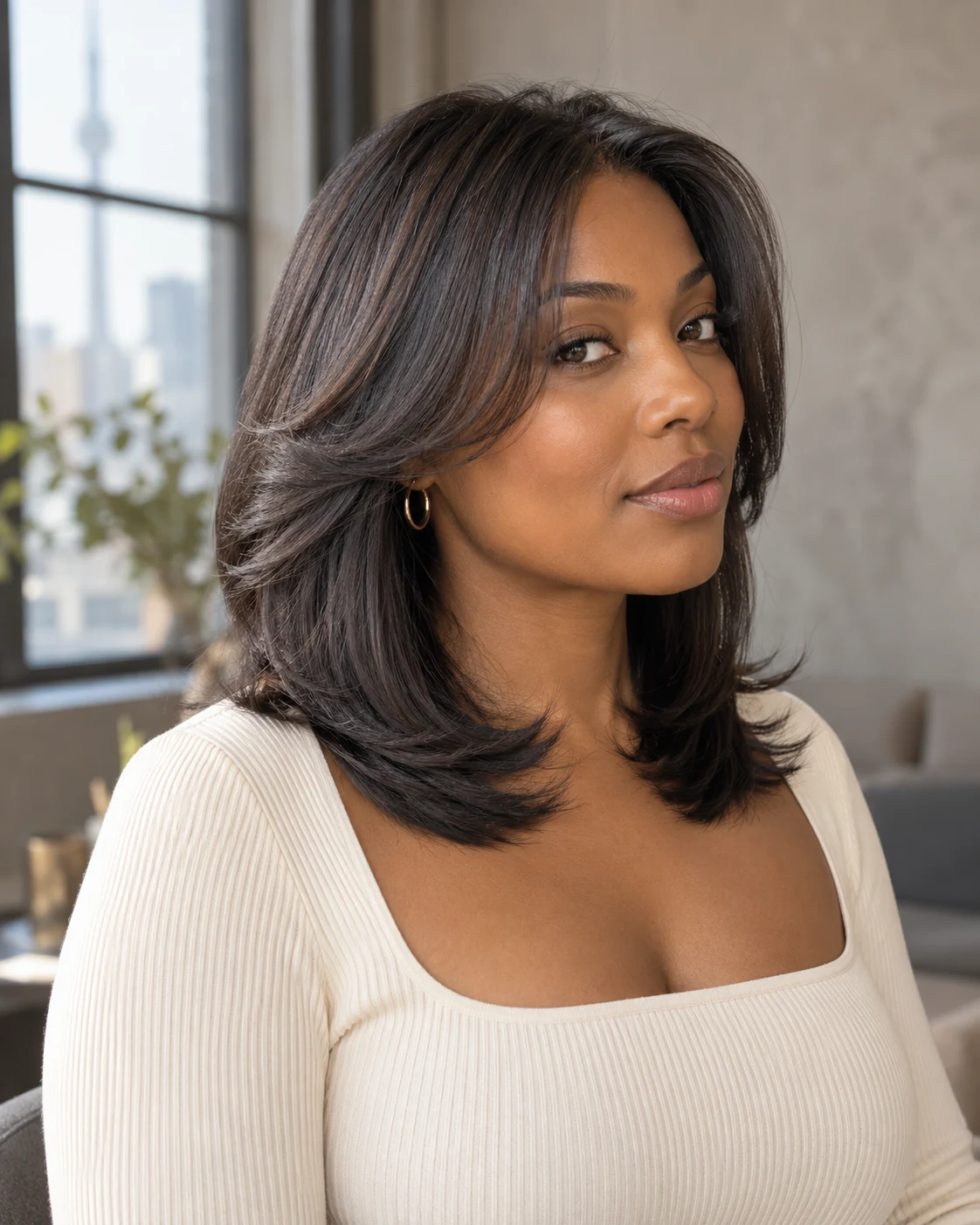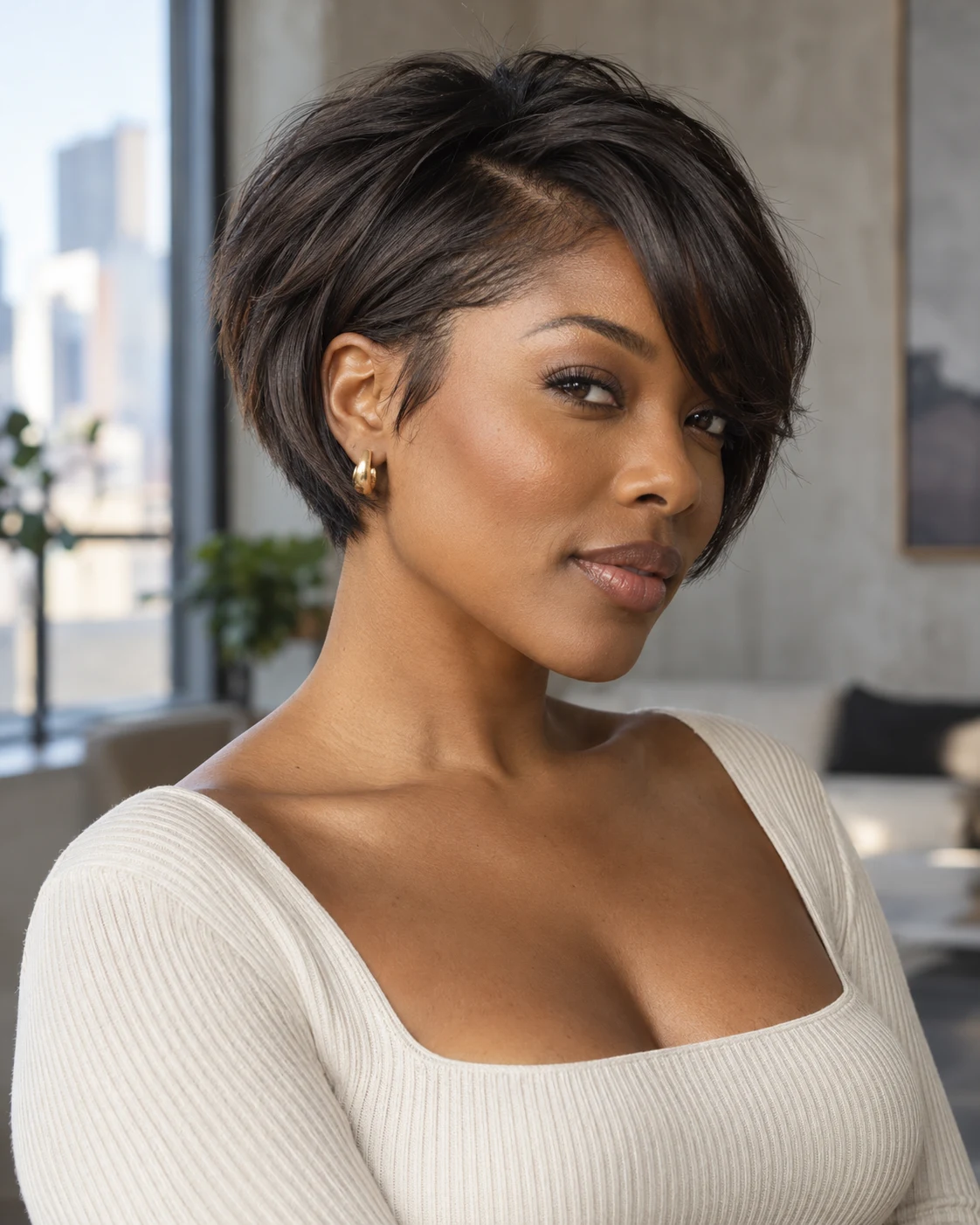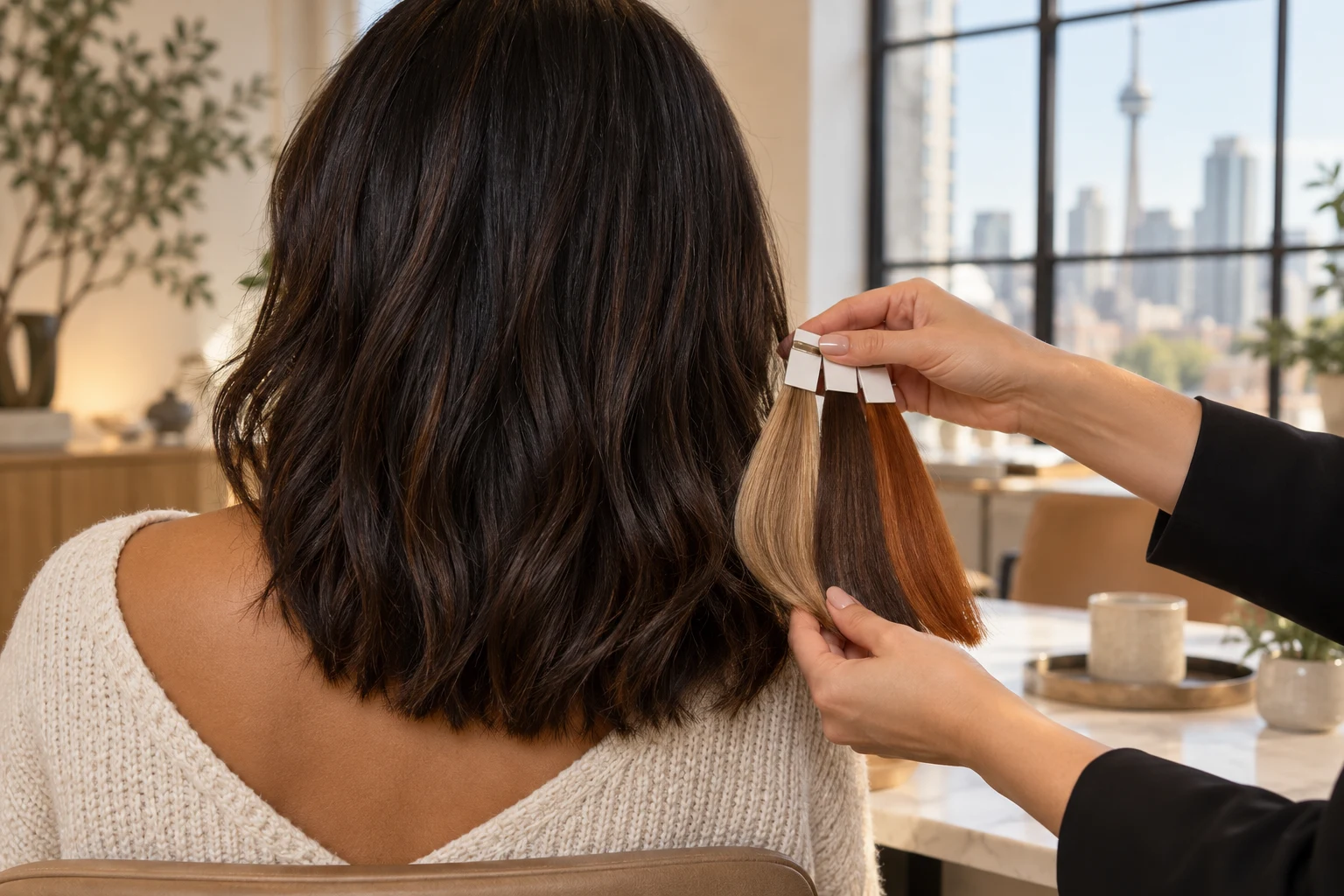

A haircut should work after the salon blow-dry has washed out. Japanese-inspired cutting starts with the way your hair actually grows, then balances length, layers and weight around your features and routine.
A method, not one particular hairstyle
A bob, pixie or long layered cut can all use this approach. Before cutting, the stylist considers density, strand thickness, natural wave, cowlicks and the outline of the head. Two people asking for the same bob may need very different internal shapes. Dense hair may need selective weight removal; fine hair often needs its perimeter preserved.
Six details that create the finish
Work with the natural fall rather than forcing every strand into place. Remove bulk where it gathers while retaining support. Use layers to create space and movement. Soften the ends when a fluid outline is wanted. Position the fringe and face-framing pieces deliberately. Finally, consider how the different lengths will grow out together. None of these means thinning the whole head indiscriminately.

Flat crowns, heavy ends and expanding sides
A flat crown may benefit from carefully shortened upper layers and a different drying direction, but removing too much density can make it flatter. Heavy ends need a transition of weight through the middle, not an empty outline. Hair that expands at the sides may settle better with enough length to fall downward. Cutting changes the visual silhouette; it cannot change the skull or permanently redirect new growth.
Face framing without rigid face-shape rules
Fringe width, cheek-level layers and the amount of side volume guide the eye. A longer face may suit more width at the cheeks; a strong jaw can be paired with a soft bend below it. These are options, not rules about what someone is allowed to wear. Bring photographs of both the front and side, and say whether you normally tie your hair back.
Japanese, Korean and geometric references
Japanese references often favour subtle texture and natural movement; Korean references may emphasise a polished outline and flowing face framing; geometric references can focus on sharper lines and structural contrast. These are broad aesthetic descriptions, not fixed national techniques. A stylist can combine elements of all three to suit your hair, without assuming texture or styling ability from ethnicity.
Make the consultation useful
Explain how much time you want to spend drying, which tools you own and what currently bothers you. Ask to see a simple finishing method before leaving. A good cut can reduce effort, but fringes and short outlines still need maintenance. Arrange the next trim around how quickly the shape changes, rather than expecting one haircut to stay unchanged indefinitely.
Frequently asked questions
Continue reading
- A better haircut consultation: length, shape and everyday care
- Root perms: volume, suitability and daily styling
Plan your visit
Discuss your hair history, target result and upkeep with your chosen location. See the Spadina menu or North York menu for Canadian prices, and confirm the final plan before treatment.