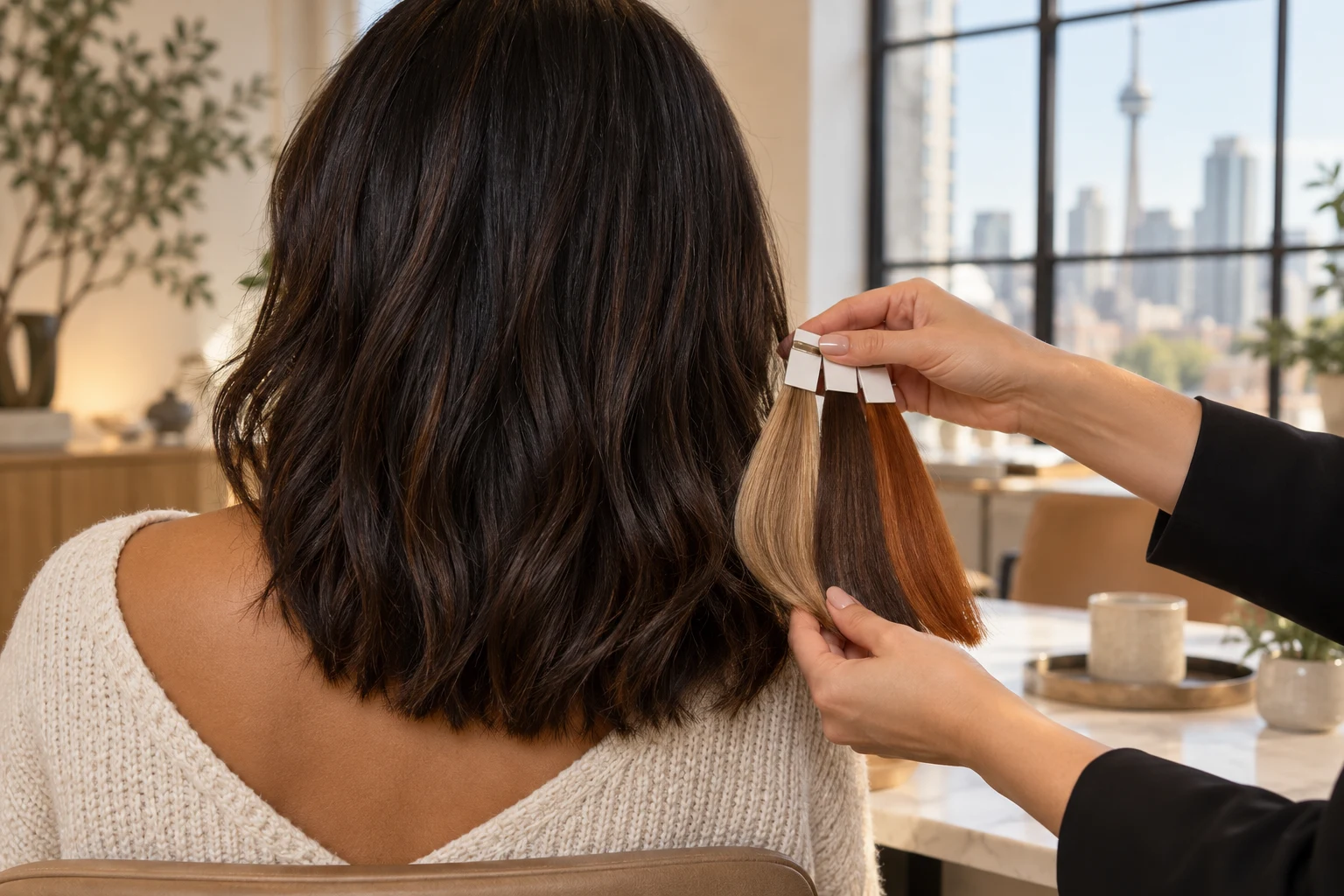
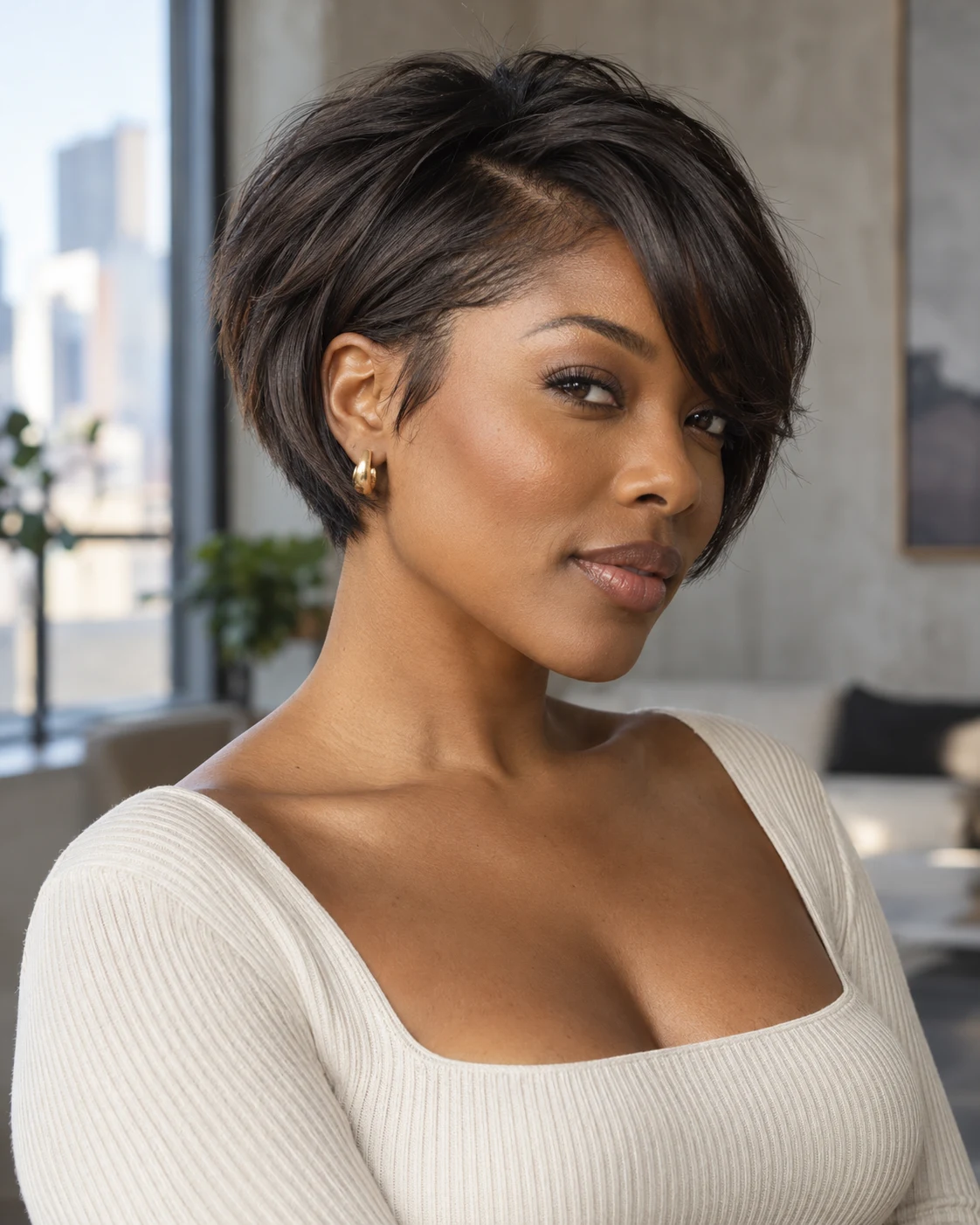
A good haircut conversation turns a general feeling into visible choices. Before the scissors come out, agree on the length to keep, the shape to create and the amount of daily styling that is realistic for you.
When is it time for a trim?
Watch how the shape behaves rather than following one interval for everyone. A short fade or precise fringe shows growth quickly, while a longer layered cut can change more gradually. Ends that catch, a perimeter that has lost its shape or styling that suddenly takes more effort are useful reasons to review the cut. If you are growing your hair, say so clearly and agree on how much can be removed before the service begins.
Bring references and describe the details
Two or three photographs with a clear front and side view are more useful than a large collection of unrelated styles. Point out the fringe, outline, layers or texture you like—and the parts you do not want. Explain whether the photograph shows your normal texture or an iron-styled finish. Terms such as fresh, youthful or low maintenance mean different things to different people, so connect them to a specific visible feature.

Agree on length before cutting
Use landmarks such as the jaw, collarbone or shoulder, and ask how the hair will sit when dry. Curly hair can spring up, and a fringe may look shorter once styled. If you need to tie your hair back, demonstrate your usual ponytail or bun. Discuss the shortest layer as well as the overall length; keeping a long perimeter does not guarantee that every section will still reach a hair tie.
Design around real life
Your texture, density, cowlicks and preferred parting influence the result alongside face shape. Include glasses, helmets, work requirements and how many minutes you want to spend styling. More layers can add movement, but can also need deliberate drying; a short cut can reduce washing time while needing more frequent trims. Ask which parts of the reference come from the cut and which depend on styling or colour.
Leave with a routine you can repeat
Watch the finishing process and ask about the direction of airflow, brush choice and amount of product. Try to keep the routine to tools you will actually use. For a home fringe tidy, ask your stylist for advice on your specific shape; wet-to-dry shrinkage and accidental over-cutting can be difficult to correct. Major shape changes are easier to plan in the chair, where the back, balance and movement can be checked together.
Continue reading
- Japanese haircutting: shape, movement and an easier everyday routine
- Men's haircut ideas: five shapes and how to choose
- Hair care at home and in the salon: what each step does
Plan your visit
Discuss your hair history, target result and upkeep with your chosen location. See the Spadina menu or North York menu for Canadian prices, and confirm the final plan before treatment.