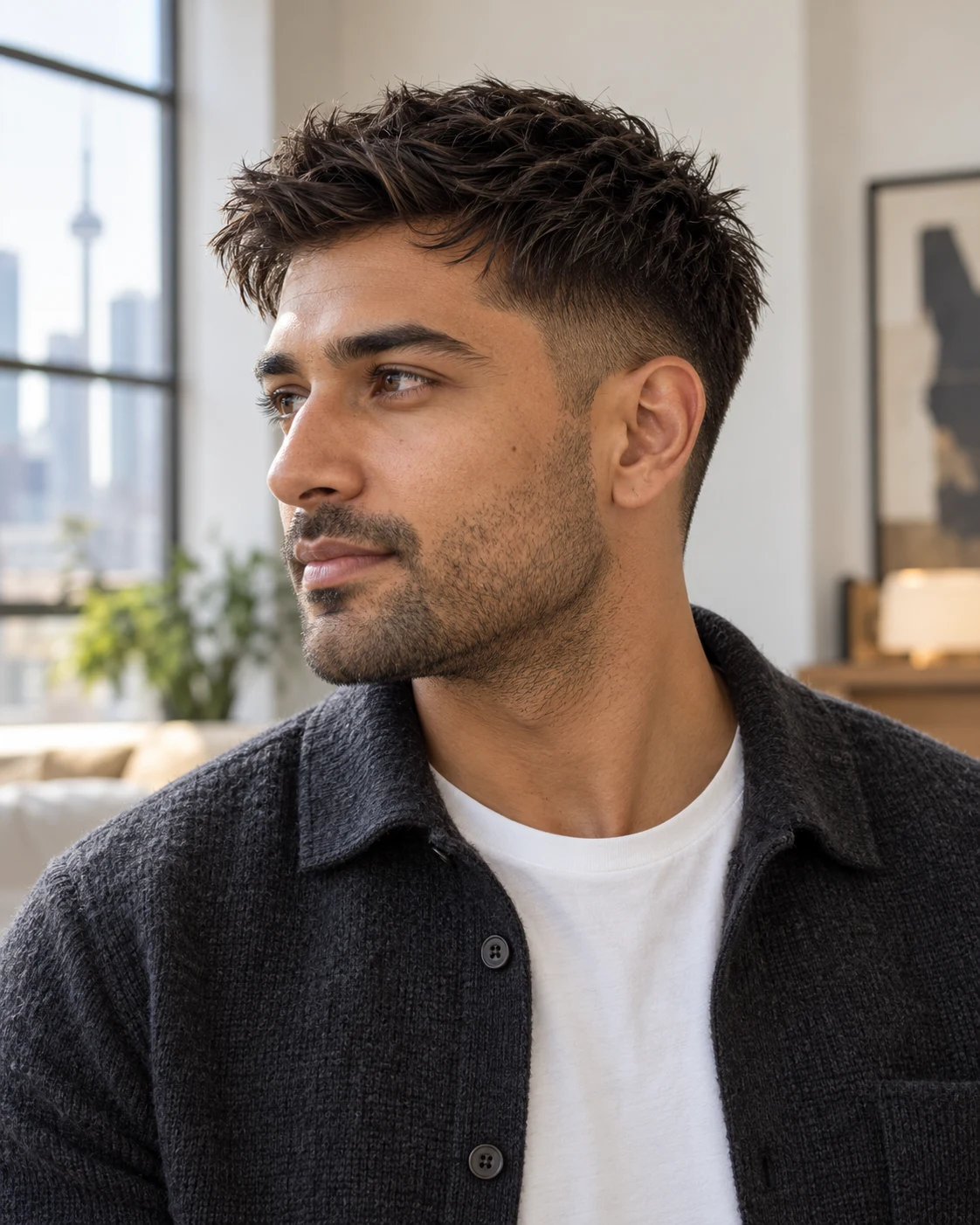
A useful haircut reference shows more than how short the sides are. The fringe, crown, neckline and transition between lengths all determine how the shape looks and how much work it needs at home.
A curved or softly parted fringe
A comma-shaped fringe uses a curved front section to frame the forehead, often balanced by lift on the other side. A softly parted textured fringe is less defined and lets smaller pieces fall naturally. Both need enough front length and a realistic plan for cowlicks. A light bend may come from blow-drying, natural texture or a suitable perm; a haircut alone will not create the same curve on every hair type.
A clean, textured short cut
Short layers and a tidy outline can keep the overall shape compact while allowing movement on top. The goal is controlled texture rather than removing all density. Thick, outward-growing sides may need some length to settle; fine hair may look fuller with a stronger outline. Ask for a finish you can recreate with a small amount of product and a simple drying direction.

Undercut and French crop
An undercut creates a stronger contrast between a longer top and shorter sides. A disconnected version keeps that contrast obvious; a blended taper softens it. A French crop usually directs a shorter fringe forward with a compact textured top. Either can be subtle or bold depending on the fringe edge, side length and skin exposure. Neither needs to copy a celebrity's exact proportions.
Talk in visible lengths, not ambiguous numbers
Clipper guard numbers and terms used in different countries are not always interchangeable. Ask your stylist to show the proposed length and clarify how much scalp you want visible. A low taper, high fade and uniform short side are different shapes even when part of the cut uses the same guard. Show side and back references as well as the front.
Balance features, texture and routine
More height can lengthen the visual outline; side width or a fringe can create a broader balance. A soft wave can change how a strong line reads, while a sharper edge can emphasise it. These are design choices, not restrictions based on face shape. Include glasses, beard shape, helmets, work requirements and the minutes you actually want to spend styling in the conversation.
Keep the cut working between visits
Dry the roots in the intended direction before adding paste, cream or gel. Matte products emphasise texture; shinier products create a different finish, not necessarily stronger hold. Start with less and distribute evenly. Short fades show regrowth sooner than longer scissor cuts, so plan maintenance around your preferred neatness. Washing frequency should follow your scalp, activity and product use rather than a fixed rule for all men.
Continue reading
- Down perms: a neater outline for hair that sticks out
- Men's perm guide: texture, fringe and curl choices
- A better haircut consultation: length, shape and everyday care
Plan your visit
Discuss your hair history, target result and upkeep with your chosen location. See the Spadina menu or North York menu for Canadian prices, and confirm the final plan before treatment.