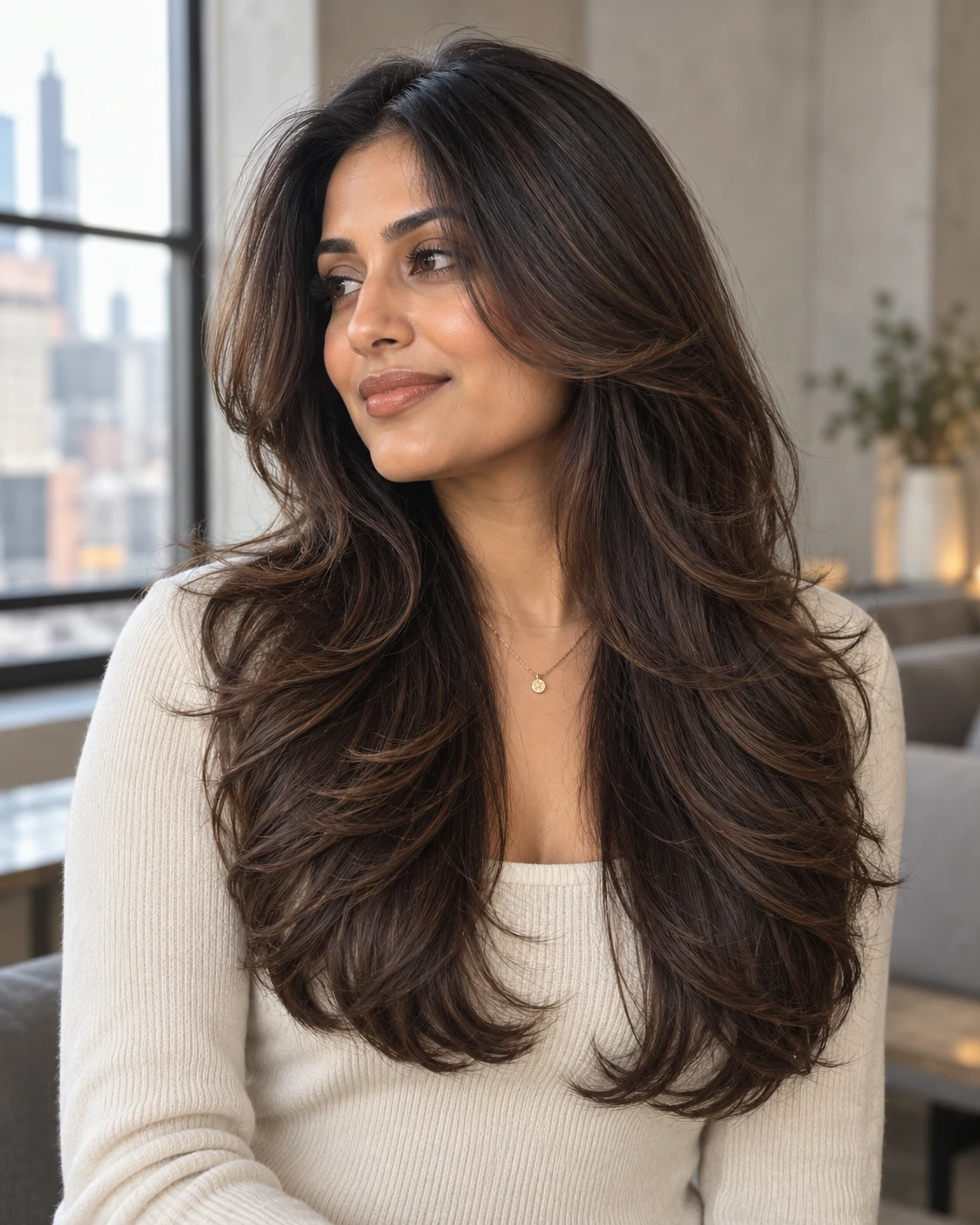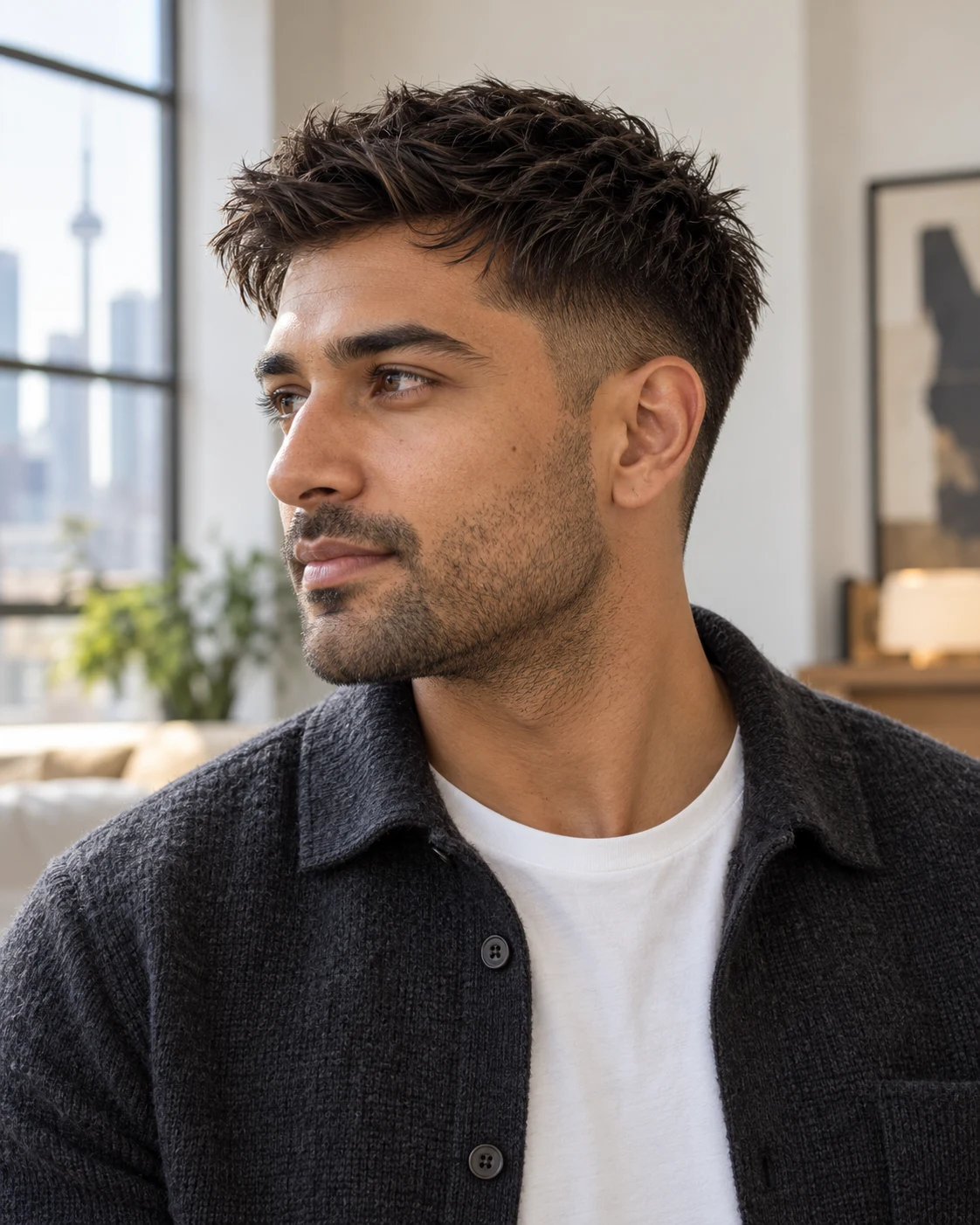
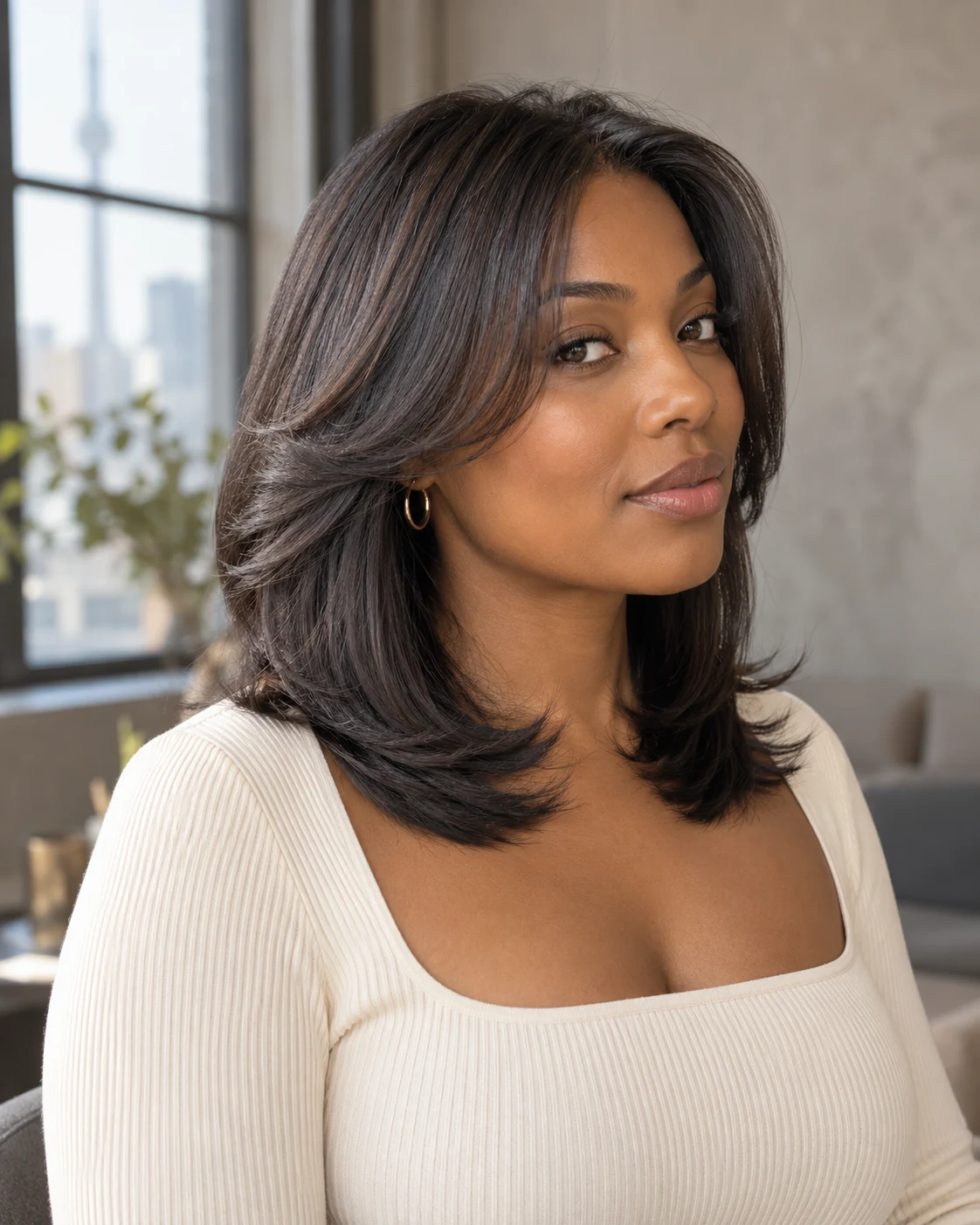
Shoulder-to-chest lengths offer room for soft bends or more defined curls while remaining practical to tie back. The best perm plan starts with the cut, the condition of the hair and the amount of styling you enjoy.
Allow for the finished length
Curl brings the ends upward, and shoulder contact can turn them outward. Rather than relying on a fixed centimetre rule, show your stylist where you want the dry ends to sit. A tighter curl needs a different starting length from a loose C-shaped bend. Very long, heavy hair may stretch a soft wave, while excessive thinning can leave the ends unable to form a cohesive curl.
Cold or heat-assisted perm?
Cold-perm systems form curls using chemical processing and rods. Digital or other heat-assisted systems combine chemical preparation with controlled heat. The names do not rank quality or guarantee less damage. Ask how the result will look wet and dry, how to style it and whether previous bleach or straightening limits the options. Straightening is a different objective and should not be treated as a repair service.
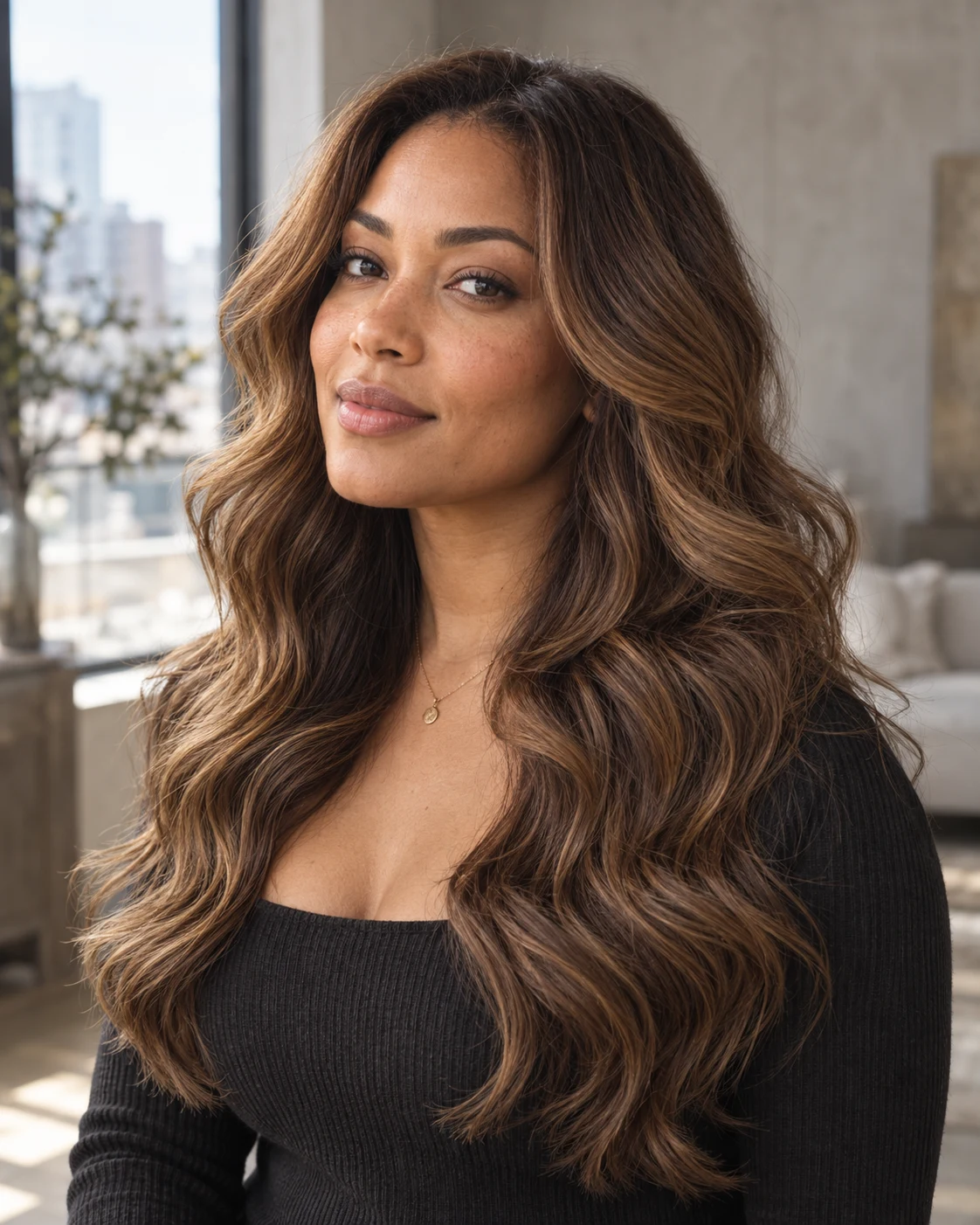
Three curl scales
Large waves have a relaxed, open shape and may need more deliberate blow-drying to remain visible. Medium waves offer a clearer rhythm without as much expansion. Small curls create more texture and visual volume, but need a cut that distributes that volume. Rod diameter alone does not predict the final curl: wrapping, hair condition, length and the chosen system also matter.
Soft everyday references
Cloud-like waves use airy, open curves. An understated loose wave adds small bends rather than a full ringlet. C-curl ends keep most of the length smooth and turn at the perimeter. A relaxed French-inspired wave can mix directions for an undone finish. In each case, decide whether you want the movement to begin near the cheek, below the ear or mainly at the ends.
More defined and mixed designs
Flowing S-waves create a more polished outline; repeated water-wave shapes look more regular; spiral layers have a stronger three-dimensional effect. A design combining side S-curves with a rounded back can change the silhouette from different angles. Flipped ends, layered waves and a softly curled fringe offer smaller changes. Trend names such as jelly or princess curls are best translated into a photograph and a description of the shape you like.
Layers and fringe set the balance
Mid-length layers create space for waves, but too many short pieces can scatter the outline. Retaining some weight at the ends helps a rounded bend look intentional. Face framing should be planned with the curl rather than added as an afterthought. Face shape is one reference among many; glasses, a centre or side part and how often you wear a ponytail also affect the design.
A routine you can repeat
Ask for a demonstration using the tools you have at home. Depending on the result, this may mean gentle scrunching, a diffuser or guiding sections while drying. Use enough conditioning for slip without flattening the roots, and avoid aggressively brushing apart a finished curl. Follow the specific first-wash instructions given for your service. Plan trims and reassessment as the shape grows, rather than repeatedly perming already fragile ends.
Frequently asked questions
Continue reading
- Cold perms explained: process, texture and daily styling
- Short-hair perms: from a soft bob bend to defined curls
- Hair care at home and in the salon: what each step does
Plan your visit
Discuss your hair history, target result and upkeep with your chosen location. See the Spadina menu or North York menu for Canadian prices, and confirm the final plan before treatment.